
Blue-Collar Workers Quit: Why Do People Quit Their Jobs, and How Can Employers Keep Them?
Why Do People Quit Their Jobs
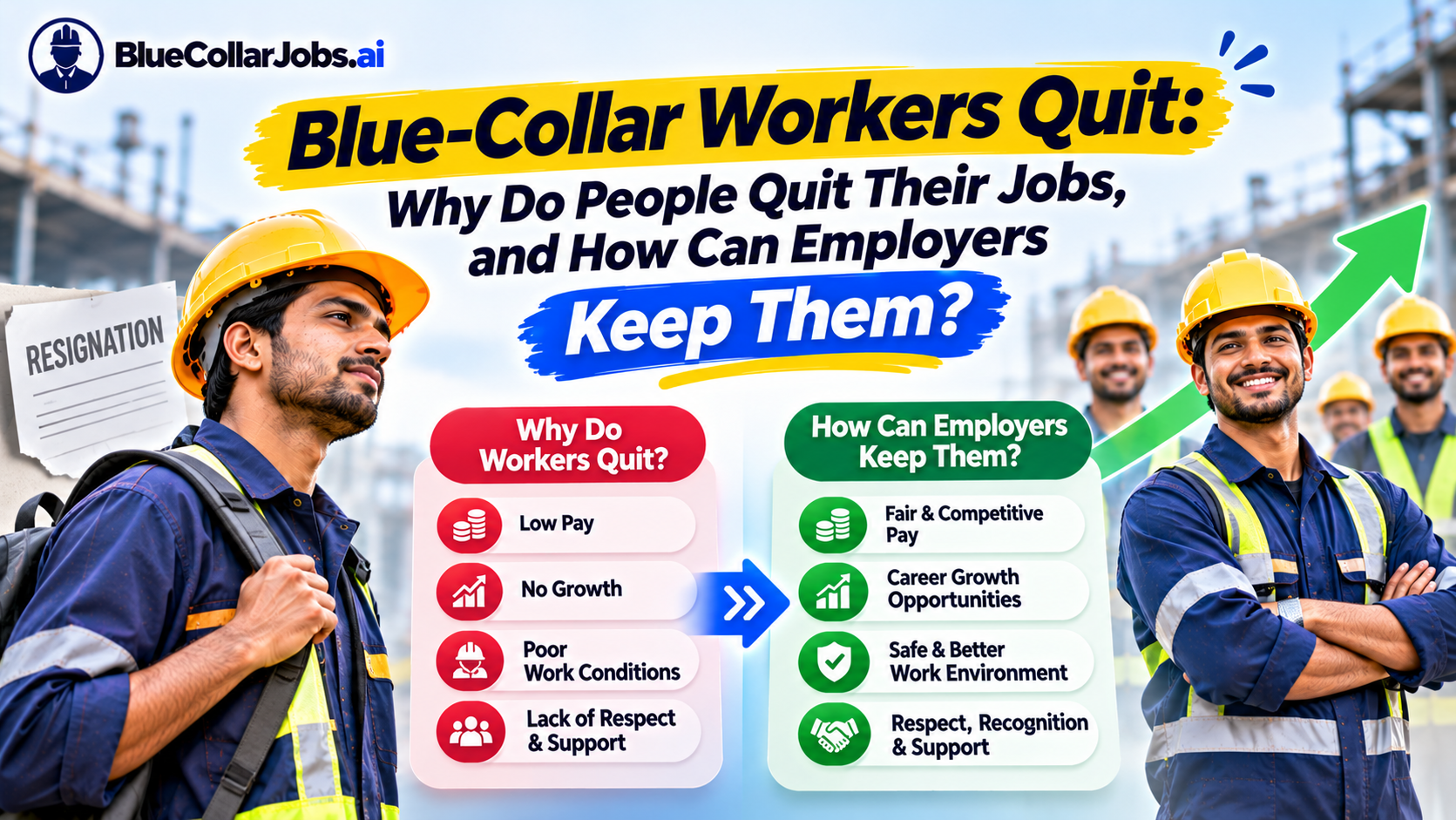
Why do people quit their jobs? For blue-collar workers, it is rarely one thing. It is usually a mix of pay, schedules, living conditions, safety and growth, and most of it can be fixed.
BlueCollarJobs.ai connects skilled workers with verified employers, so we see both sides of the hiring table. This guide explains why workers leave and what employers can do to improve retention. It also helps workers choose a job they will want to stay in.
Why Do People Quit Their Jobs? Five Reasons Behind Blue-Collar Exits
Reason | What Workers Face | What the Research Says |
|---|---|---|
Low or late pay | Pay below market; wages that arrive late | Low pay is the top reason frontline workers say they would quit (UKG, 2026). Wage delays are a key driver in India (Betterplace, via Taggd). |
Unpredictable schedules | Shifts that change at short notice | After pay, schedule flexibility matters most for staying (UKG). Flexible schedules make workers 2.6 times more likely to plan to stay (goHappy, 2026). |
Poor housing and daily strain | Crowded hostels, long commutes | Hostel conditions and commutes are common exit triggers in India (Leap10x, 2026). |
Unsafe or unheard | Missing equipment; concerns that nobody acts on | Unsafe conditions drive exits beyond pay (Betterplace, via Taggd). Workers who feel unheard disengage first and quit second (Leap10x). |
No path to grow | The same role, year after year | Career reasons led exits in a Q2 2026 study of 3,265 exit interviews (Work Institute). |
Pay is often the trigger, not the whole cause. A small pay gap can tip the decision of a worker who already feels invisible.
Why Do People Quit Their Jobs & What Quitting Costs
Why do people quit their jobs more often in frontline work? Partly because the market is open: frontline roles in India often see 40 to 100% annual attrition, against 12 to 20% in corporate roles (Leap10x). The encouraging part is that 42% of people who quit say their employer could have prevented it (Gallup, via the World Economic Forum). Most reasons sit in the employer's hands.
How Employers Can Keep Blue-Collar Workers
Focus Area | What to Do | Simple Place to Start |
|---|---|---|
Fair pay | Pay on time, every time; review wages against the market each year | Blue-collar wages are growing 5 to 6% a year (Deloitte India), so frozen pay falls behind. Give every worker a written appointment letter, now mandatory under India's Labour Codes. |
Scheduling | Publish shifts early; allow shift swaps | Share the roster at least a week ahead and let workers trade shifts. |
Housing | Provide clean, safe housing or a housing and travel allowance | Inspect worker housing regularly and help migrant workers travel home for festivals. |
Safety | Make safety visible every day | Supply proper equipment, hold short site safety talks and offer a simple way to report problems. Provide basics the law expects, such as drinking water and restrooms. |
Growth and respect | Show a clear path up | Name the next skill or role, promote from within and act on the feedback you receive. |
Retention improves when workers see that these promises are kept, not just written down.
For Workers: Five Questions to Ask Before You Accept a Job
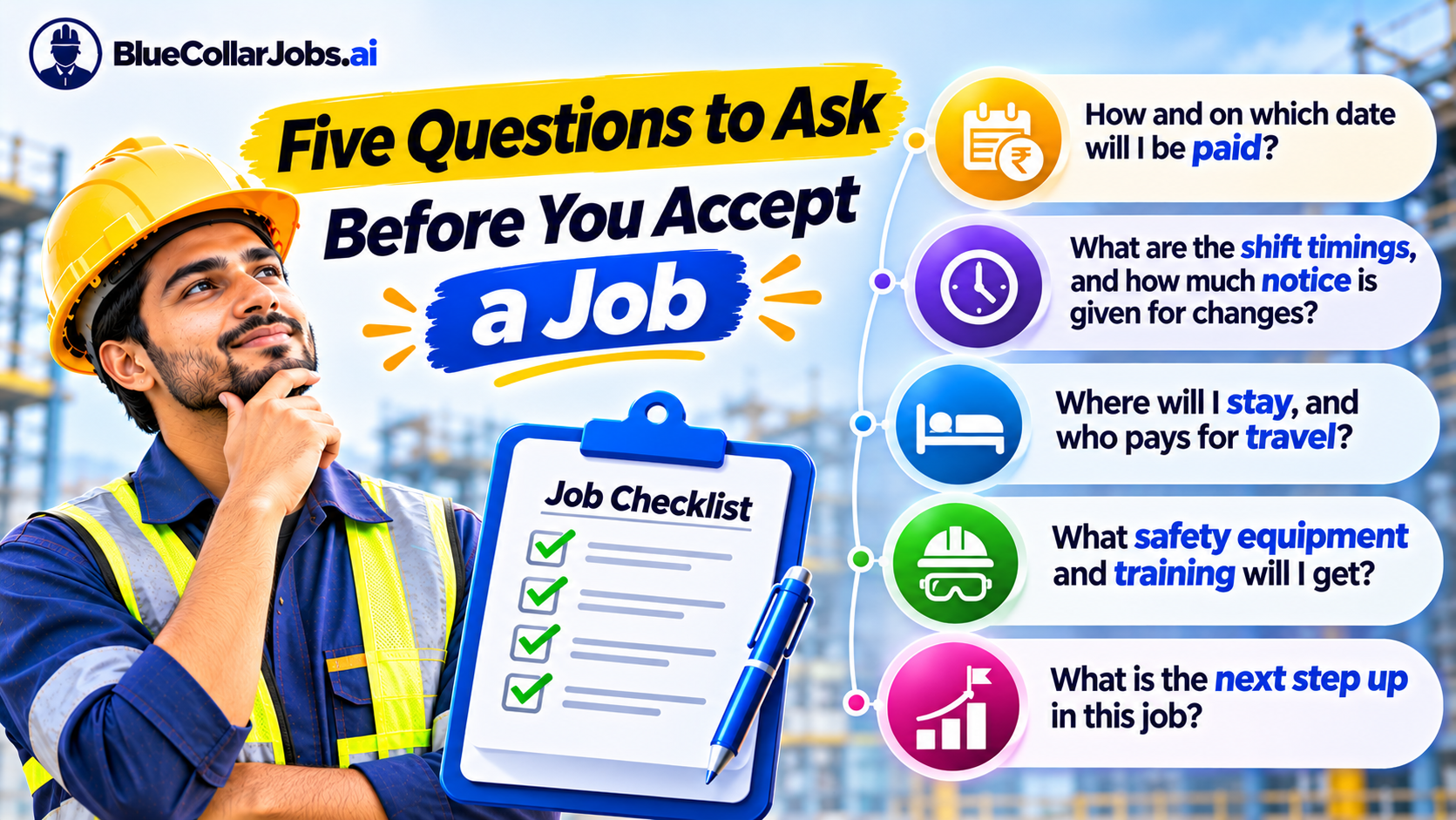
How and on which date will I be paid?
What are the shift timings, and how much notice is given for changes?
Where will I stay, and who pays for travel?
What safety equipment and training will I get?
What is the next step up in this job?
Ask for the offer in writing, and never pay a fee to get a job.
How BlueCollarJobs.ai Helps Employers and Workers
Many early exits start with a poor match: the wrong trade, the wrong location or the wrong expectations.

BlueCollarJobs.ai helps both sides start well. Employers connect with verified, skilled workers who fit the role. Workers see real employers and clear job details before they commit, with no agents in between.
Indian workers: register for just ₹1,000
International workers: join for just $20
Better matches mean fewer surprises and longer careers.
Visit bluecollarjobs.ai to connect with the right job or the right worker.
Frequently Asked Questions
1. Why do people quit their jobs?
People quit for a mix of reasons. For frontline and blue-collar workers, the most common are low or late pay, unpredictable schedules, poor living conditions, unsafe workplaces and no chance to grow. Pay is often the trigger, while feeling unheard or undervalued is often the deeper cause.
2. Why do blue-collar workers quit more often than office workers?
Blue-collar roles often have rotating shifts, physically demanding work, housing or commuting strain and fewer visible promotions. In India, frontline roles often see 40 to 100% annual attrition against 12 to 20% in corporate roles (Leap10x).
3. How can employers improve retention among blue-collar workers?
Focus on five areas: pay on time and in line with the market, predictable schedules, safe and clean housing, visible safety practices and a clear path to grow. Listen to workers and act on what they say.
4. Is fair pay enough to stop workers from quitting?
Fair pay is the most important starting point, but it is rarely enough alone. Schedules, housing, safety and respect all shape whether a worker stays, and a worker who feels invisible may leave for a small pay gain.
5. How does BlueCollarJobs.ai help reduce quitting?
BlueCollarJobs.ai connects verified, skilled workers with verified employers, with no agents in between. A better match on trade, location and expectations helps both sides avoid early exits. Indian workers register for ₹1,000 and international workers for $20.
Sources:
World Economic Forum: Why Frontline Workers Leave and What Employers Can Do About It
Taggd: Blue Collar Jobs in India, The 2026 CHRO Hiring Guide (citing Betterplace)
Leap10x: Employee Attrition in India 2026, Rates by Industry and Real Causes
Deloitte India: Blue-Collar Wages Rise 5 to 6% Annually (May 2025)
BDO India: Implementation of Labour Codes, Key Provisions Effective 21 November 2025
The Peoples Board: Hiring in India 2026, A Complete Guide for HR Leaders